Laungenburgh
The human capital is the administrative heart of the Empire: a city of stone authority, records, guild offices, military habit, and civic pride. It gathers people from every road that still answers imperial law.
Humans are the restless heirs of Laungenburgh: adaptive, ambitious, and trained by empire to believe that roads, laws, ledgers, and walls can hold back the ruin of the Old World.
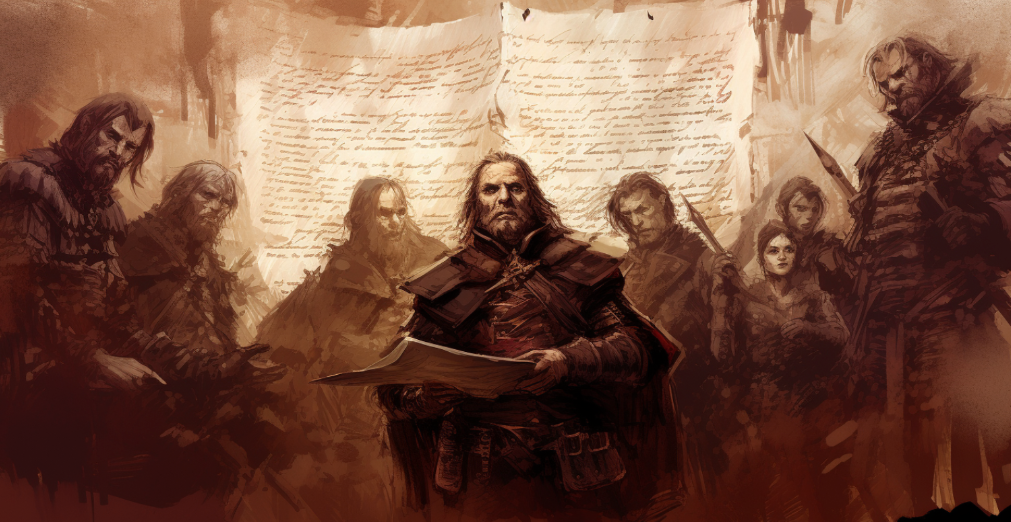
The human capital is the administrative heart of the Empire: a city of stone authority, records, guild offices, military habit, and civic pride. It gathers people from every road that still answers imperial law.
Human geography is measured by what can be reached, taxed, defended, and remembered. Roads, milestones, watch houses, and trade posts are as important to human identity as farms and city walls.
Beyond the capital, human lands fray into defended villages, abandoned estates, ruined keeps, and contested passages where local survival often matters more than imperial theory.
Humans change quickly because they must. Their strength is not purity of tradition but the ability to borrow tools, methods, and customs from whoever survives nearby.
The Empire trusts written law, official memory, military rank, and guild procedure. This makes humans efficient, but also prone to mistaking documentation for control.
Human ambition built the systems that still bind much of Altarmn together. It also left stone evidence of every conquest, failure, and border that later generations must inherit.
Thantie of Athesia.
Return to the race list in the player's guide.
Elves of Ethos.