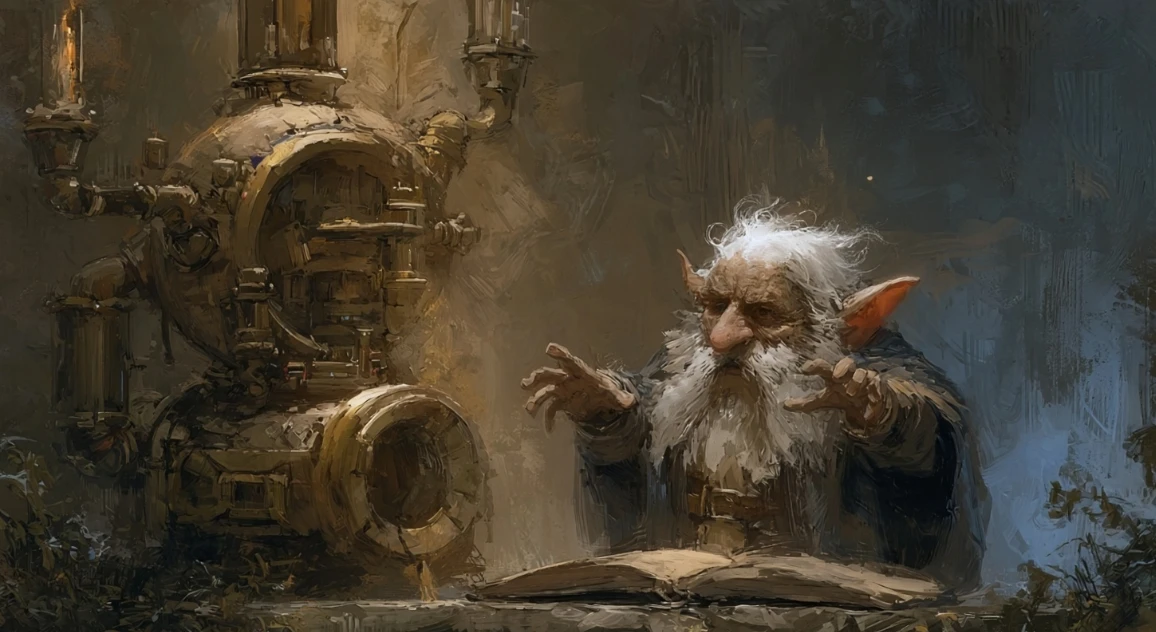
Most of what you need in Ethernalis can be made from what you find. Crafting turns sticks, stones, pelts, and scraps into torches, campfires, bandages, weapons, and armour. Every item you make is rolled for quality, carries the materials it was made from, and wears down as you use it.
Open the recipe list
Press C, or choose Crafting from the top menu, to open the recipe list. Recipes you can make right now sit near the top, followed by ones where you hold the ingredients but lack a tool or a place to work. Where several recipes make the same item, they share one row, and you can switch between them.
Pin a recipe to keep it at the top of the list. Track one, up to five at a time, to see what you still need on your character sheet and at the side of the screen while you explore.
Gather what the recipe needs
A recipe uses up its ingredients. Some also need things that are not used up: a tool in your pack, a Burning Campfire in the room, or a place to work, such as a forge or an Anvil. A few need a perk or a piece of knowledge you have learned.
A good first craft is a Campfire from a Stone and a Wood Piece. Once it is lit, many cooking recipes open up.
Craft it
Choose Craft Now. Small things, like bandages, a campfire, or a meal over the fire, are made on the spot for 1 action point. Each successful craft earns experience and trains your Craftsmanship.
You can also combine cards by hand without picking a recipe. If they match nothing, the attempt still costs an action point, so check the list first.
Bigger work takes time
Anything larger takes turns, and each turn is about an hour. The recipe shows how many, and the button reads Begin Work. Planks, rope, or a potion take 2 or 3 turns, leather armour or a stone furnace most of a day, and chain mail or an anvil 8 or more.
Beginning the work takes the ingredients out of your pack and holds them on the unfinished piece. Each turn of work uses the rest of your turn while the world goes on: hunger and thirst rise, and whatever roams the dungeon keeps roaming. Clear the room and eat before you start anything long.
While you work, the day and night wheel shows the hours passing and what your character is doing. Work stops when an enemy appears, when hunger or thirst grows severe, or when you choose Stop working. It also needs its tools and workplace every turn, so a piece begun at a forge is finished at a forge.
Stopped work waits at the top of the recipe list. Resume it when it is safe. Abandon gives the parts back, each 1 durability or 1 quality worse, so only give up on work you cannot finish.
Now and then the work goes its own way. The grain splits or a seam tears, and you choose what to do: accept a poorer piece, spend more turns doing it properly, or take a better part from something you carry. Each choice shows what it costs.
Why quality matters
Every craft rolls a quality from 1 to 10, from Dismal to Masterful. The roll starts at 1 to 5. Your Craftsmanship level is added to it, the Artisan perk adds 1, and Patience of 5 adds 1 while Patience of 1 takes 1 away. Some claimed rooms add more. A quality of 9 or 10 is a masterwork, and your chronicle remembers it.
Quality scales an item's numbers: damage, defence, durability, healing, value, and the rest. A Dismal item works at 60% of the usual strength, a middling one at 100%, and a Masterful one at 150%. The same recipe can make a poor tool or a great one.
Why materials matter
Crafted items keep the materials of their ingredients. On weapons and armour, the materials add small bonuses. Metal adds 2 to Melee, leather adds 2 to Dodge, bone adds 1 to Melee, and textile adds 1 to Sneak. Wood adds 5 durability and stone adds 8 durability and 1 Defence.
Materials also decide how fast a weapon wears. Every hit has a chance to cost durability: 30% for gem, 50% for stone, 70% for metal, 80% for wood, and up to 100% for cloth, herbs, and flesh. The hardest material in the item sets the rate.
Some creatures fear certain materials and shrug off others. A weapon of the right material deals double damage to a creature that is vulnerable to it, and half to one that resists it.
Keep your gear repaired
Weapons wear as you strike and armour wears as you are hit. At 0 durability an item is broken and gives you nothing until it is repaired. Keep an eye on the gear you rely on most.
To repair an item yourself, combine it with Blacksmith Tools. The item gets back as much durability as the tools have left, the tools are used up, and the item permanently loses 1 point of maximum durability. A broken item comes back with only 1 durability, so repair before things break, not after.
A smith or armourer in a settlement repairs everything you carry, back to full, for gold. It costs more as the merchant grows, but your gear loses nothing.
Improve what you have
Use Blacksmith Tools on an item that is already at full durability and you try to raise its quality by one step instead. The chance is 100 divided by the item's current quality, plus your Craftsmanship level, as a percentage. A poor item is easy to improve and a fine one is hard. The tools are used up either way.
Take apart what you do not need
Discarding an item can give some of its materials back. Each piece of listed loot has its own chance, and every level of Craftsmanship adds 10% to it. The discard window shows the odds before you commit. Enchanted items give back a rune instead.